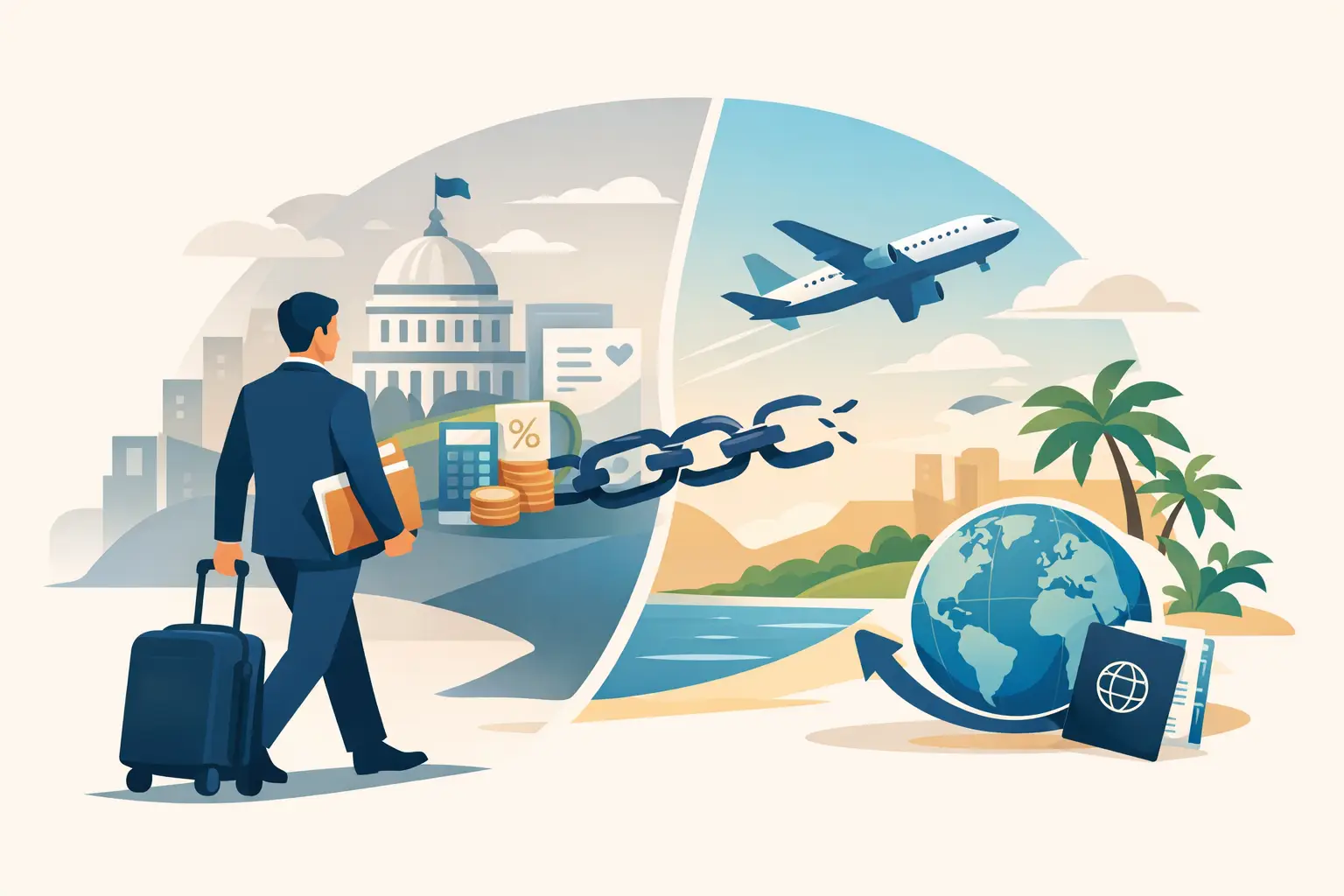

If you are asking where can Americans move for lower taxes, you are probably not looking for a fantasy list of cheap beach towns. You are looking for a legal, durable plan that reduces tax pressure without creating a bigger mess in residency, compliance, family logistics, or business operations. That is the right question to ask.
For US citizens, the headline issue is simple but often misunderstood. Moving abroad does not automatically end your US tax obligations. The United States taxes citizens on worldwide income, which means country selection matters, but structure matters more. The goal is not just to find a place with low local taxes. It is to build a cross-border setup where residency, sourcing, business income, personal lifestyle, and US rules work together.
Where can Americans move for lower taxes and still live well?
The best answer depends on what kind of taxpayer you are. A founder with an online business has very different options than a W-2 executive, a retiree living on investment income, or a family that wants long-term residency and strong schools. Still, a handful of countries come up repeatedly because they combine relatively favorable tax treatment with livability, residency pathways, and international practicality.
The United Arab Emirates is often at the top of the list for entrepreneurs and high earners. There is no personal income tax, and for many people the math is compelling. Dubai and Abu Dhabi also offer excellent infrastructure, global connectivity, safety, and a business-friendly environment. The trade-off is that it is not a low-cost destination, and the residency process needs to be handled properly. If you want a premium lifestyle with very low personal tax exposure, it is one of the strongest options.
Portugal has been popular for years, though it is no longer the easy tax play many Americans assume it is. It still appeals to families, professionals, and retirees because of lifestyle, healthcare, and relatively straightforward residency routes. But the tax picture has become more nuanced, and what works for one person may not work for another. Portugal can still be viable, especially if lifestyle is carrying more weight than aggressive tax reduction, but it requires current planning rather than outdated internet advice.
Panama remains attractive for Americans who want territorial-style taxation, easier banking access within the region, and a practical base in the Americas. Foreign-source income can receive favorable treatment, and the country has long been a relocation option for entrepreneurs and retirees. The upside is clear: proximity to the US, established expat communities, and relatively accessible residency pathways. The downside is that not every business model fits neatly into the local rules, and operational details matter.
Paraguay is often mentioned because of its relatively low taxes and lower cost of living. For the right person, it can be a smart part of a broader freedom strategy. But this is usually not a plug-and-play solution for clients who want elite healthcare, polished infrastructure, and a highly international environment. It can work well if your priorities are tax efficiency and flexibility, less so if you want a luxury global city experience.
Costa Rica can make sense for Americans who value lifestyle, natural beauty, and regional access more than pure tax minimization. Its tax system has advantages in certain situations, particularly around foreign-source income, but it is not a universal answer. For families and remote professionals, it often wins on quality of life rather than being the most aggressive tax jurisdiction.
The Cayman Islands is another obvious low-tax option. There is no personal income tax, and it has long appealed to high-net-worth individuals and finance professionals. But it is expensive, small, and not the right fit for everyone. If your priority is a premium English-speaking environment with strong international familiarity, it deserves attention. If you need affordability or broader cultural variety, probably not.
The real issue is not just where can Americans move for lower taxes
The bigger question is what kind of tax reduction is actually available to you.
If you are a US citizen, you may be able to reduce your effective tax burden through the Foreign Earned Income Exclusion, foreign tax credits, careful income sourcing, and better entity structuring. But these tools apply differently depending on whether your income comes from salary, self-employment, business profits, investments, or real estate. The same country can look excellent on paper and perform poorly in practice if your income type is mismatched.
For example, a remote business owner may benefit significantly from living in a no-income-tax jurisdiction while structuring operations carefully under US rules. A salaried employee working for a US company may have fewer levers. A retiree living off investment income may care less about earned income exclusions and more about local tax treatment of dividends, capital gains, pensions, and estate planning.
This is why country shopping without strategy usually leads to bad decisions. People hear that a place is tax-free, then move before understanding residency triggers, substance requirements, permanent establishment risks, or how their US filings will still follow them. Lower taxes are possible. Sloppy planning is expensive.
What to compare before choosing a low-tax country
Tax rates are only one layer. Serious relocation planning compares five things at once.
First, look at how the country taxes residents. Some countries tax worldwide income. Others use territorial systems or carve out foreign-source income in ways that can be highly favorable. That distinction changes everything.
Second, look at how easy it is to become and remain a legal resident. A country may have attractive tax rules but weak visa options, heavy physical presence requirements, or unclear long-term pathways for spouses and children.
Third, assess whether the lifestyle actually fits. Many Americans say they want low taxes, but what they really want is a calmer life, safer environment, more time freedom, better healthcare, or stronger global mobility. If the country fails on those points, tax savings alone will not make the move successful.
Fourth, consider business practicality. Can you bank there? Can you hire there? Can you invoice globally without friction? Can you travel easily to clients, partners, or family? A tax-friendly country that complicates operations may cost more than it saves.
Fifth, understand how the move affects your US position. Federal tax is one issue. State tax is another. Many Americans underestimate how sticky state residency can be. Leaving California or New York is not always as simple as buying a one-way ticket.
Countries that tend to fit different profiles
For entrepreneurs and location-independent founders, the UAE, Panama, and in some cases Paraguay often stand out because they can support lower-tax outcomes with the right structure. The UAE is usually the premium choice. Panama often appeals to those who want regional convenience and a more familiar bridge back to the US.
For families, Portugal and Costa Rica often stay in the conversation because quality of life is a major factor. The pure tax savings may not be as dramatic as people hope, but the overall upgrade in daily life can still make the move worthwhile.
For high-net-worth individuals prioritizing asset protection, privacy, and no personal income tax, the Cayman Islands and the UAE tend to be more relevant. These are not entry-level relocation markets, but they can be very effective for the right profile.
For retirees, Panama often deserves a closer look because it balances accessibility, practical residency options, and favorable treatment in the right circumstances. It is not the only answer, but it is one of the more workable ones.
Common mistakes Americans make when moving abroad for tax reasons
The first mistake is treating tax rate tables like a relocation strategy. A lower nominal tax rate does not automatically mean a lower overall burden.
The second is ignoring US citizenship-based taxation. Americans do not get the same clean break that many other nationalities get when they relocate.
The third is choosing a country for one benefit while overlooking three hidden costs. Sometimes the local tax is low, but the immigration path is weak, the banking is difficult, or the family fit is poor.
The fourth is moving before the plan is built. The best outcomes usually come from sequencing things properly: state tax exit, residency setup, entity review, timing of income, and then the move itself.
That is where a firm like Global Freedom Advisory becomes useful. The value is not in handing you a generic list of tax-friendly countries. It is in matching your goals, income profile, family situation, and freedom priorities to a structure that actually works in real life.
If you want to pay less tax, moving abroad can absolutely be part of the answer. But the winning move is rarely just picking the cheapest jurisdiction. It is choosing the right country, the right timing, and the right structure so your tax position improves while your life gets better too.